Stone treatment depends on the full situation, not only the stone size.
A small stone may pass. A stone with infection may become dangerous. A silent kidney stone may grow. A recurrent stone former needs prevention, not just repeated procedures.
The first priority is safety. The second is stone clearance. The third is recurrence prevention.
We commonly evaluate
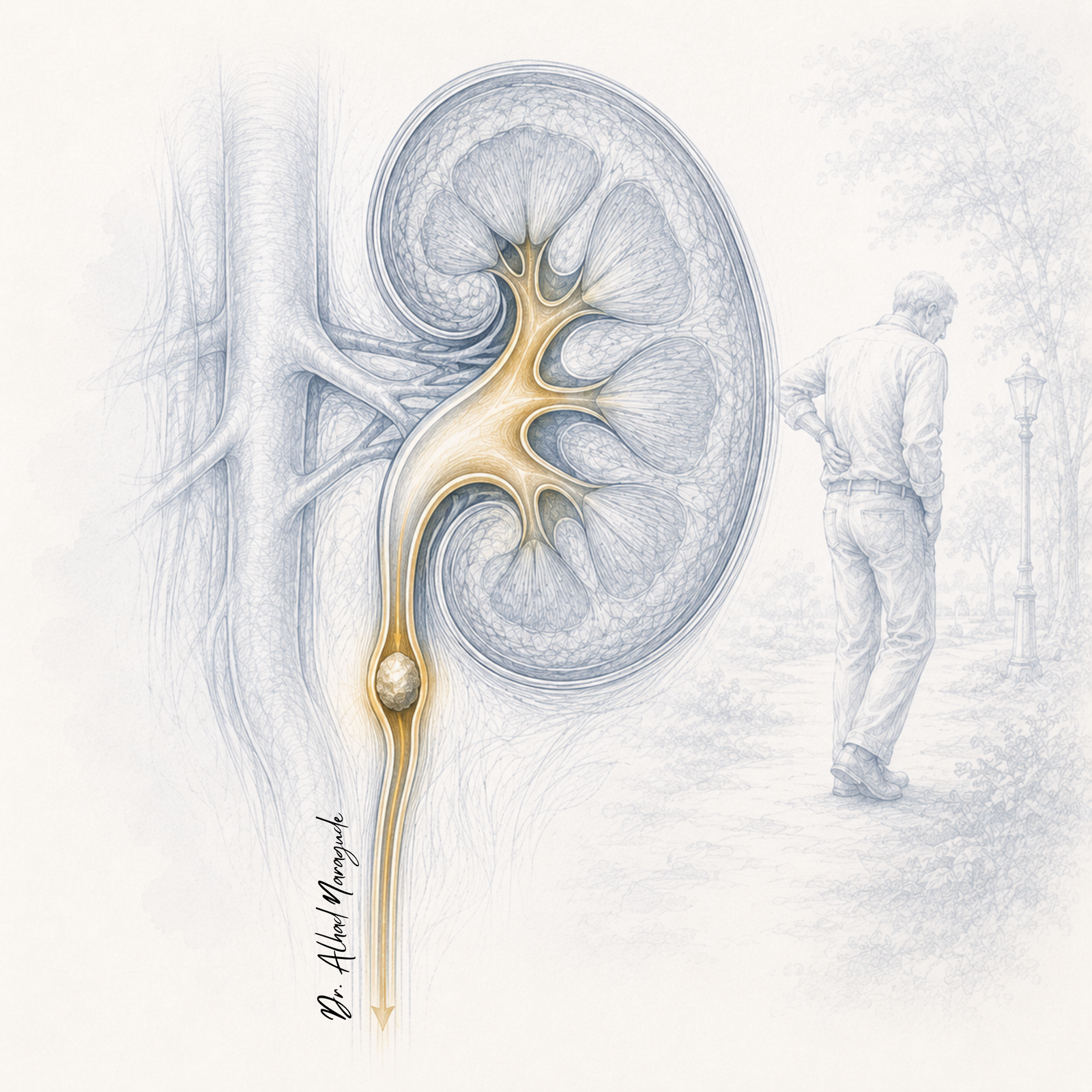
- Sudden flank pain
- Pain radiating to groin or testis
- Vomiting with pain
- Burning urination
- Blood in urine
- Fever with stone pain
- Kidney swelling
- Recurrent stones
- Residual stones
- DJ stent discomfort
Evaluation may include
- Urine routine
- Urine culture
- Kidney function test
- Ultrasound KUB
- X-ray KUB when useful
- NCCT KUB for stone size, site, density and obstruction
- Stone analysis after removal
- Metabolic evaluation in recurrent stone formers
Treatment may include
- Pain control
- Observation for stones likely to pass
- Medical expulsive therapy in selected ureteric stones
- DJ stenting or nephrostomy for urgent drainage
- URSL
- RIRS / flexible ureteroscopy
- PCNL / mini-PCNL
- ESWL in selected cases
- Stone prevention plan
Urgent evaluation is needed if stone pain is associated with
- Fever or chills
- Vomiting
- Low urine output
- Uncontrolled pain
- Diabetes
- Pregnancy
- Solitary kidney
- Transplant kidney
- Rising creatinine