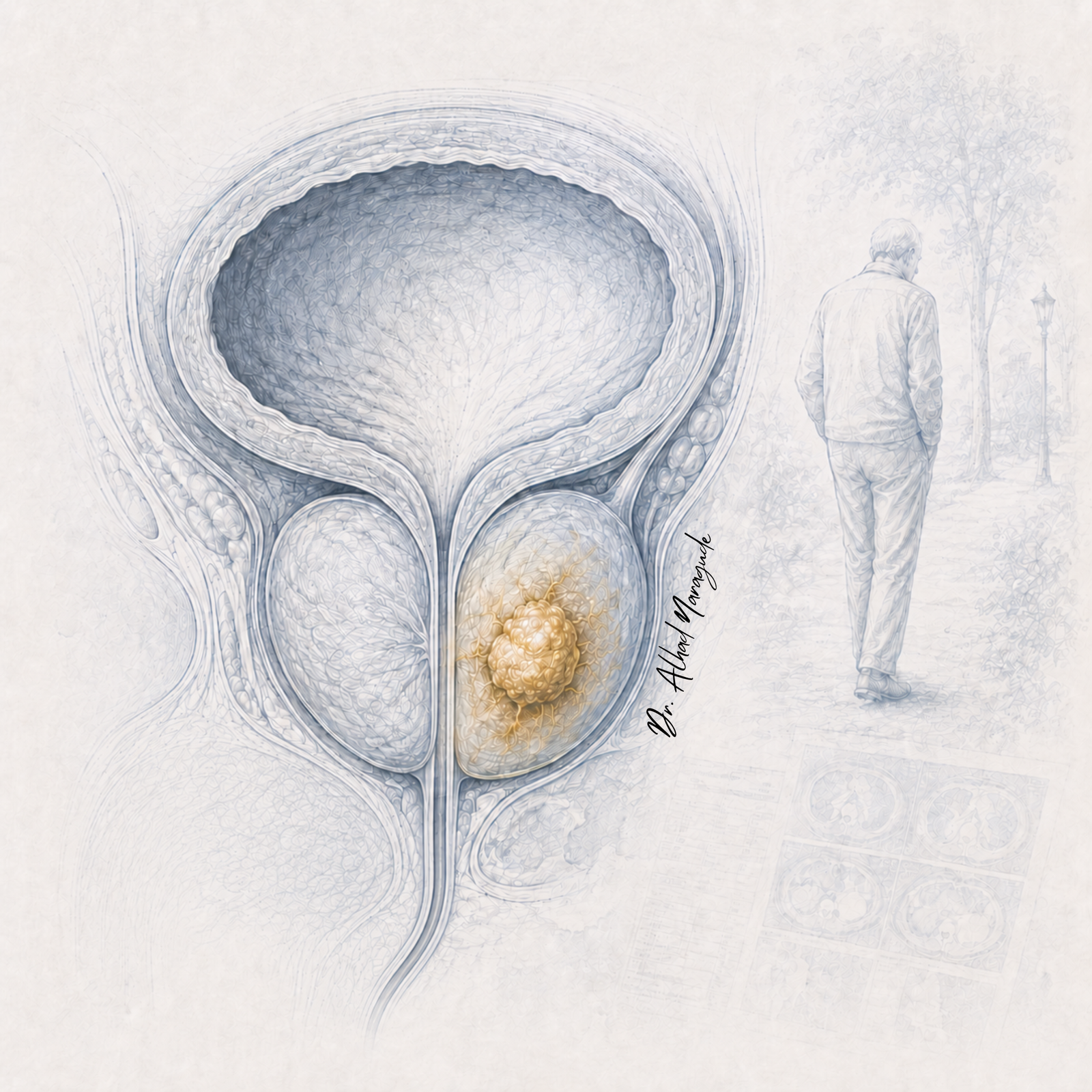
A raised PSA does not automatically mean prostate cancer. It means the risk needs proper interpretation.
PSA may rise due to prostate enlargement, infection, urinary retention, catheterisation, recent instrumentation or cancer. Modern prostate cancer evaluation uses PSA trend, prostate size, PSA density, examination findings, MRI prostate, family history and biopsy planning.
The goal is to detect clinically significant cancer while avoiding unnecessary panic and unnecessary procedures.
We commonly evaluate
- Raised PSA
- PSA anxiety
- Abnormal prostate examination
- MRI prostate report
- Family history of prostate cancer
- Biopsy advice
- Newly diagnosed prostate cancer
- Follow-up after surgery or radiation
- Urinary or sexual problems after treatment
Evaluation may include
- PSA trend review
- Repeat PSA when appropriate
- Prostate examination
- PSA density assessment
- Multiparametric MRI prostate
- MRI-targeted and/or systematic biopsy planning
- Biopsy report interpretation
- Staging imaging when indicated
Treatment may include
- Active surveillance in selected low-risk disease
- Radical prostatectomy discussion
- Radiation therapy coordination
- Hormonal therapy counselling
- Advanced cancer care coordination
- Follow-up after treatment
- Management of urinary leakage or erectile dysfunction after treatment