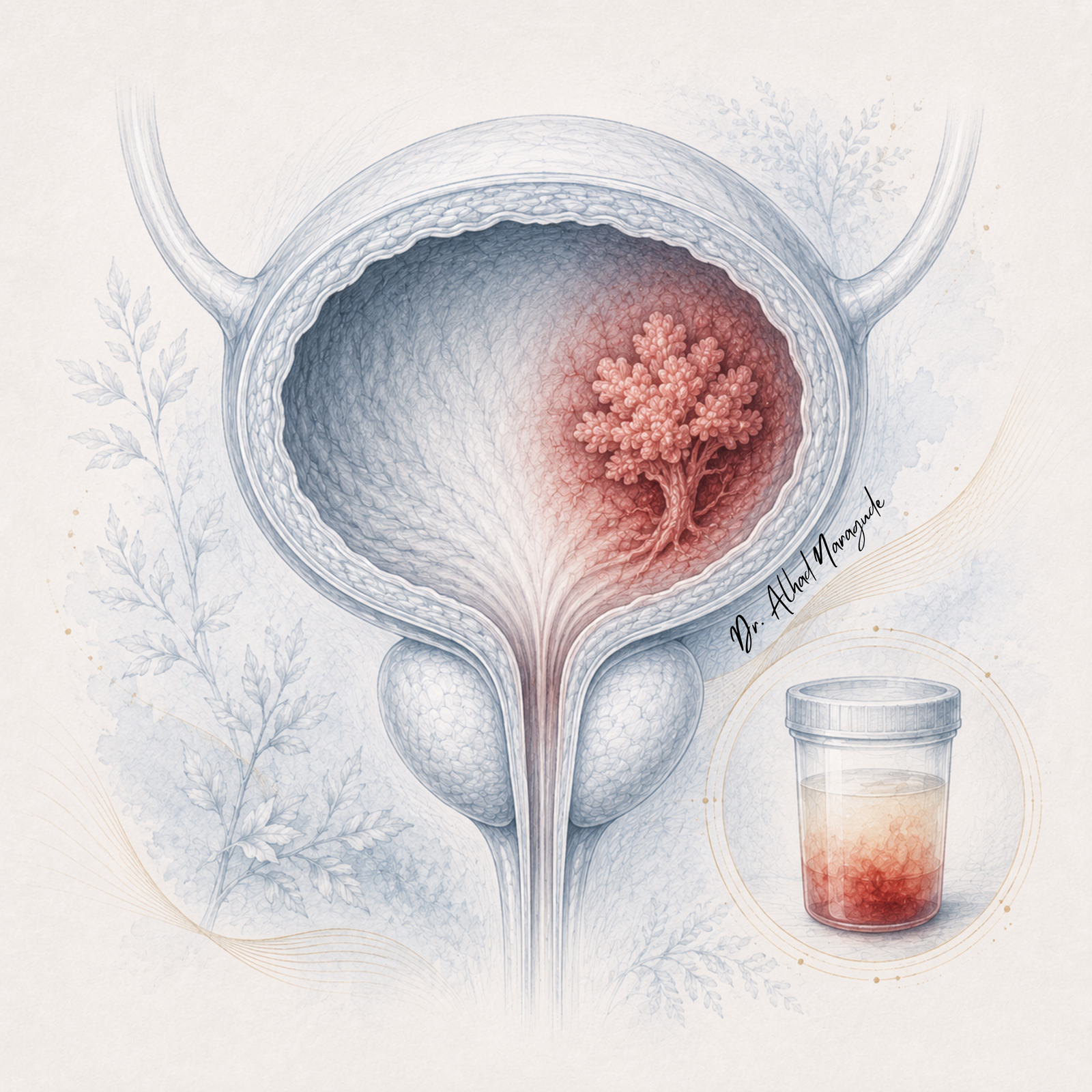
Bladder cancer often presents with blood in urine. The bleeding may be painless, may happen only once and may stop on its own.
That is why it is missed.
Blood in urine, especially in adults, smokers, tobacco users or patients with recurrent unexplained urinary symptoms, should be evaluated properly. Early bladder tumours can often be treated through the urinary passage, but follow-up depends on tumour grade, stage and risk category.
We commonly evaluate
- Visible blood in urine
- Blood clots
- Painless hematuria
- Bladder tumour on ultrasound or CT
- Recurrent bladder tumour
- Follow-up after TURBT
- Recurrent UTI-like symptoms not improving properly
Evaluation may include
- Urine routine and microscopy
- Urine culture
- Ultrasound or CT urography
- Urine cytology in selected cases
- Cystoscopy
- TURBT for diagnosis and treatment
- Pathology-based risk assessment
Treatment may include
- TURBT
- Intravesical chemotherapy in selected cases
- BCG or other intravesical therapy based on risk
- Surveillance cystoscopy
- Repeat resection in selected cases
- Coordination for radical surgery, chemotherapy, immunotherapy or radiation when required